
Winter brings one of the most expensive home emergencies there is: a frozen pipe that bursts. A single burst pipe can release hundreds of gallons of water into your home in an hour. So learning how to prevent frozen pipes is one of the smartest things you can do before the first hard freeze.
The good news is that most frozen pipes are preventable. A few simple steps handle the risk. And if a pipe does freeze, acting fast can keep it from bursting.
This guide covers why pipes freeze, how to prevent it, the warning signs to watch for, and exactly what to do if a pipe freezes or bursts.
The Short Answer
To prevent frozen pipes, keep your home warm, insulate the pipes most at risk, and let a faucet drip during a hard freeze. The pipes most likely to freeze run through unheated spaces, like attics, crawl spaces, garages, and exterior walls. If a pipe does freeze, shut off the water and thaw it slowly. If it bursts, shut off your main valve right away and call for help. In metro Atlanta, the real danger is the sudden cold snap we aren't always ready for.
In This Guide
Why Pipes Freeze and Burst
Water expands when it freezes. That's the whole problem. As ice forms inside a pipe, it pushes against the pipe walls and against the water trapped between the ice and a closed faucet. That pressure, not the ice itself, is what bursts the pipe.
So a pipe can freeze without bursting, and the break often happens somewhere other than the frozen spot. Pipes also freeze fastest in unheated or poorly insulated spaces. The usual suspects are:
- Pipes in attics, basements, crawl spaces, and garages.
- Pipes running along exterior walls.
- Outdoor faucets, hose bibs, and sprinkler lines.
In Atlanta, the bigger risk isn't a long deep freeze. It's the sudden cold snap that catches homes built for mild winters off guard.
How to Prevent Frozen Pipes
Most of this is simple and cheap, especially next to the cost of a flood. Start before winter, then add a few habits during a freeze.
Before winter:
- Insulate exposed pipes with foam sleeves, especially in the attic, garage, and crawl space.
- Seal gaps where cold air reaches pipes, like around wall penetrations and rim joists.
- Disconnect and drain garden hoses, then shut off the water to outdoor faucets.
- Find your main water shut-off valve now, before you ever need it in a hurry.
During a hard freeze:
- Keep your heat on, even when you're away, and no lower than 55 degrees.
- Open the cabinet doors under sinks so warm air reaches the pipes.
- Let a faucet drip slowly. Moving water is much harder to freeze, and a trickle relieves pressure.
- Keep the garage door closed if water lines run through it.
None of these take long. Together, they prevent the large majority of frozen pipes.
Warning Signs a Pipe Is Frozen
Catching a frozen pipe early gives you a chance to thaw it before it bursts. So watch for these signs during cold weather:
- No water, or only a trickle, from a faucet on a cold day.
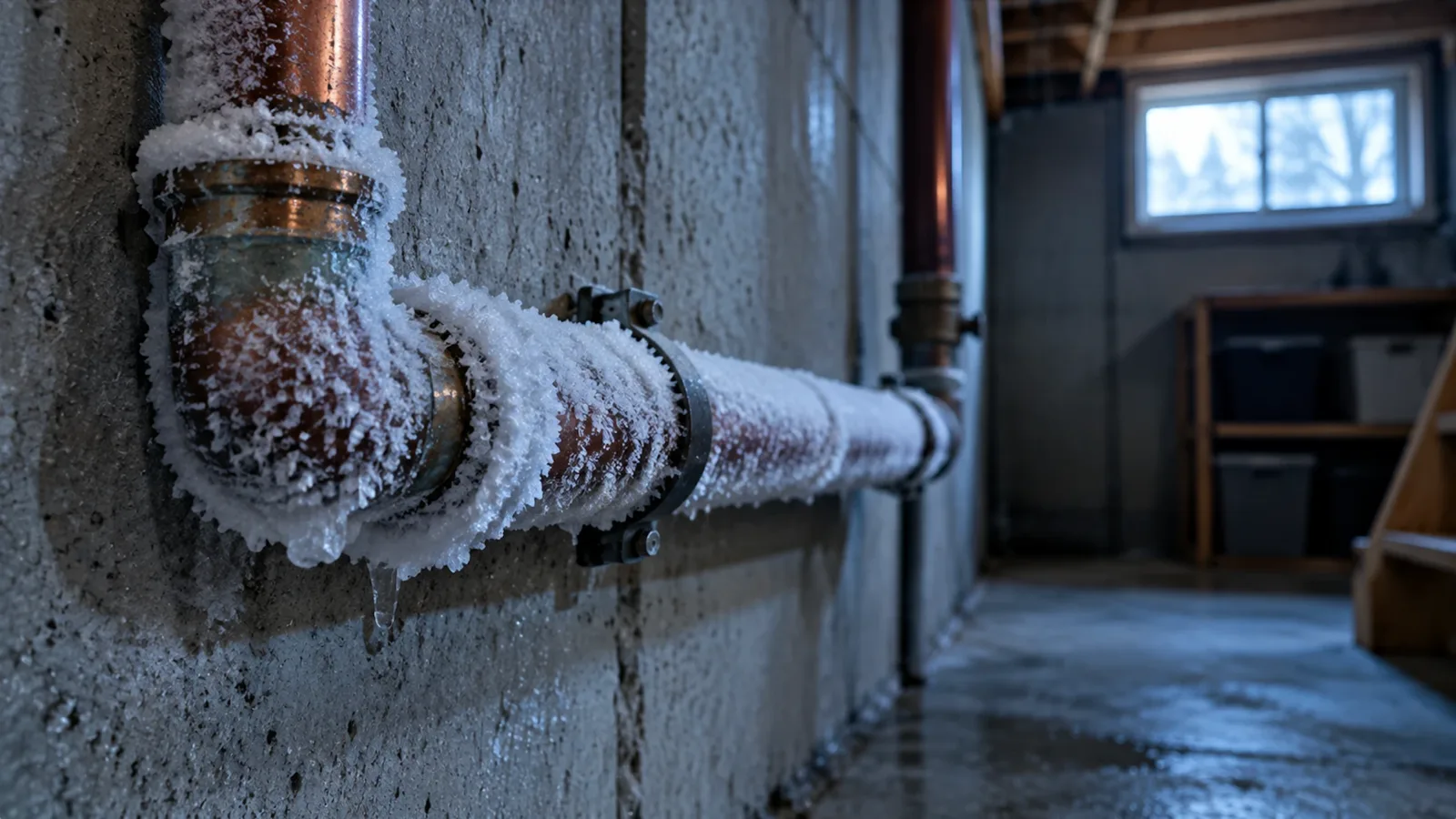
- Frost on an exposed pipe.
- A strange smell coming from a drain or faucet.
- A bulge or a visible bend in a pipe.
If you turn on a tap during a freeze and barely anything comes out, treat it as a frozen pipe until you know otherwise.
What to Do If a Pipe Freezes
If you find a frozen pipe before it bursts, you can often thaw it yourself. Here's how to do it safely:
- Open the faucet the pipe feeds, so water and steam can escape as it thaws.
- Warm the pipe gently with a hair dryer, a heating pad, or towels soaked in hot water. Start near the faucet and work back toward the cold spot.
- Never use an open flame or a blowtorch. That's a fire risk, and it can damage the pipe.
- If you can't reach the frozen section, or it won't thaw, call a professional.
Keep in mind that if one pipe froze, others may be close behind. So check your other faucets too.
What to Do If a Pipe Bursts
A burst pipe is an emergency, because the water adds up fast. So move quickly:
- Shut off your main water valve immediately. This stops the flooding at the source.
- Turn off the power to any affected area if water is near outlets or the electrical panel.
- Move belongings out of the water and photograph the damage for your insurance claim.
- Call a restoration professional to extract the water and dry the structure before mold sets in.
Our step-by-step guide on what to do immediately after water damage walks through those first hours in detail. And most standard policies cover a sudden burst pipe, which we explain in our guide on whether insurance covers water damage.
How We Can Help
At Atlanta Elite Reconstruction Services, we respond to burst pipes and frozen-pipe flooding 24/7 across metro Atlanta. We stop the water, extract it, dry the structure with commercial equipment, and handle the repairs. Our lead specialist is IICRC certified, and we bill your insurance directly when the damage is covered. If a pipe has burst, reach out to our team right away, or learn more about our water damage mitigation services.

About the Author
Matthew Borzie is the founder of Atlanta Elite Reconstruction Services, a family-owned restoration company based in Decatur, Georgia. He is IICRC certified in Water Damage Restoration, Applied Structural Drying, and Applied Microbial Remediation.