
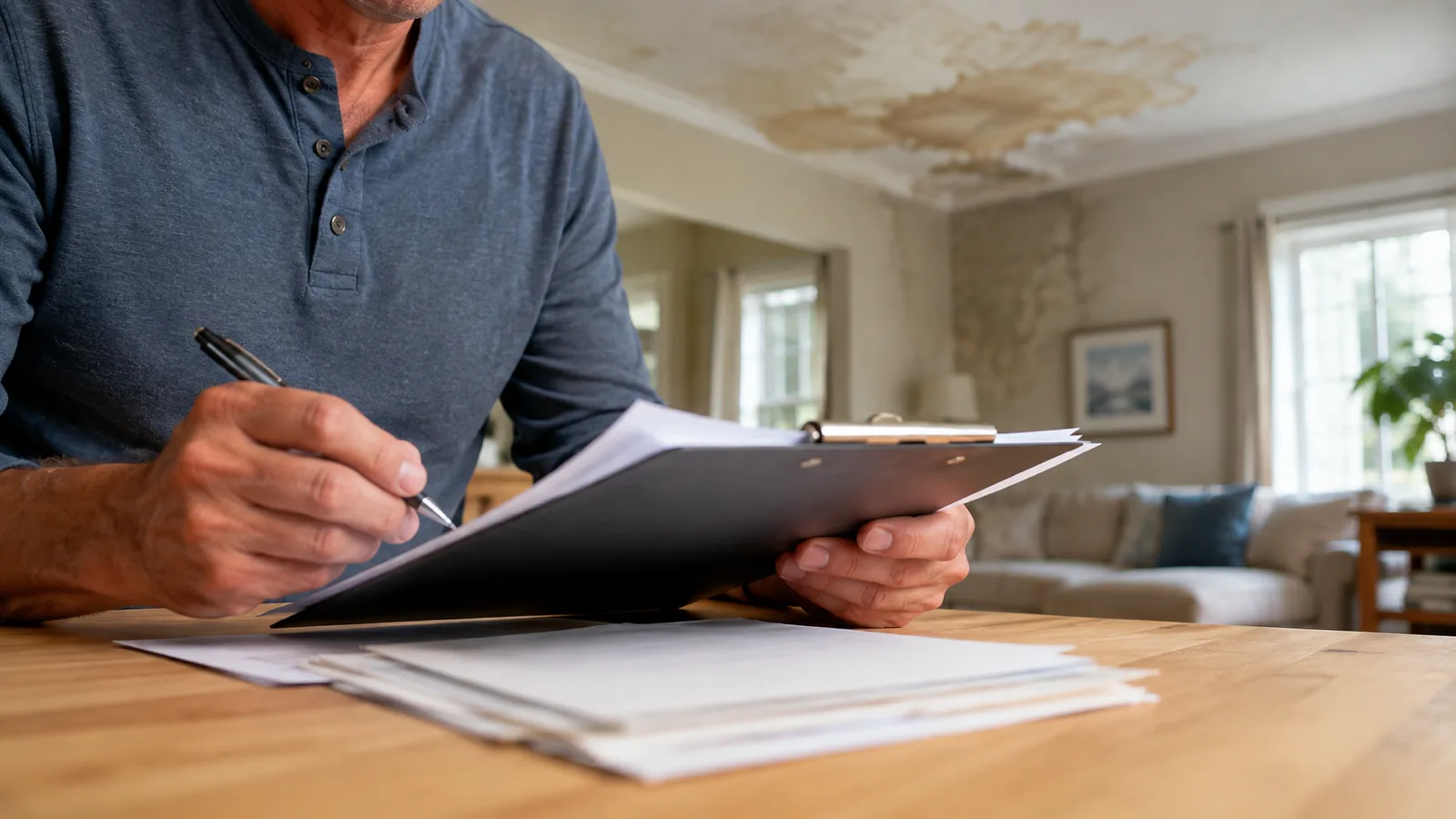
When water is running across your floor or dripping through your ceiling, one of the first questions on your mind is whether your insurance will pay for it. It's a fair question, and the honest answer is that it depends on what caused the damage.
As a family-owned restoration company that works directly with insurance carriers across metro Atlanta, we see approvals and denials every week. The difference almost always comes down to two things. The first is the cause of the damage. The second is how well that damage was documented before anyone started cleaning up.
This guide explains what a standard homeowners policy typically covers, what it usually doesn't, the difference between water damage and flood damage, and how to give your claim the best possible chance of approval.
The Short Answer
Most homeowners insurance policies cover water damage that's sudden and accidental, like a burst pipe, an overflowing appliance, or rain coming in through a storm-damaged roof. They generally don't cover damage that builds up gradually, damage caused by neglected maintenance, or flooding that comes from outside the home. Those last two usually need separate coverage.
In This Guide
Water Damage That Is Usually Covered
The key phrase in almost every homeowners policy is "sudden and accidental." If the water damage happened abruptly and wasn't something you could reasonably have prevented, there's a good chance it's covered. Common examples include:
- Burst or frozen pipes. A pipe that ruptures without warning is the classic covered claim. (Here's how to prevent frozen pipes in the first place.)
- Appliance failures. A washing machine hose that breaks, a dishwasher that overflows, or a water heater that suddenly fails.
- Plumbing supply line breaks. A supply line to a toilet or sink that lets go unexpectedly.
- Storm-driven rain. If wind or a fallen limb damages your roof and rain gets in, the resulting water damage is typically covered.
- Accidental overflow. A tub or sink left running, or an air conditioner condensate line that backs up suddenly.
- Water used to put out a fire. Damage from firefighting efforts is generally covered under your policy.
In each of these cases, the event was unexpected and happened quickly. That's what insurers mean by sudden and accidental, and it's the category most water damage claims fall into.
Water Damage That Is Usually Not Covered
Policies are written to cover accidents, not the slow effects of time or the results of deferred maintenance. The most common reasons a water damage claim gets denied include:
- Gradual leaks and seepage. A pipe that's been dripping behind a wall for months, slowly rotting the framing, is treated as a maintenance issue.
- Wear and tear. Aging plumbing, worn seals, and deteriorating caulk are considered your responsibility to maintain.
- Flooding from outside the home. Rising water from heavy rain, an overflowing creek, or storm surge is specifically excluded from standard policies. This needs flood insurance.
- Sewer or drain backups. Water backing up through your drains is usually excluded unless you've added a specific endorsement.
- Ground and surface water. Water that seeps up through a foundation or basement floor generally isn't covered by a standard policy.
- Damage in a vacant home. If a home sits unoccupied for an extended period, some policies limit or exclude water damage that happens during that time.
The good news is that many of these gaps can be closed. Flood insurance and a sewer backup endorsement are both available, and we cover each below.
Sudden vs. Gradual: Why Claims Get Denied
The single biggest reason water damage claims get denied is that the damage is judged to be gradual rather than sudden. Understanding this distinction can save you a lot of frustration.
Consider two homes with a leak under the kitchen sink. In the first, a supply line bursts on a Tuesday afternoon and floods the cabinet and floor within an hour. That's sudden and accidental, and it's very likely covered. In the second, a small drip has been quietly soaking the cabinet base for six months, and the homeowner only notices when the wood warps and mold appears. An adjuster looks at the rot and the mold growth, concludes the problem developed over time, and usually denies the claim.
That's why catching leaks early matters so much, both for your home and for your coverage. Check under sinks and around appliances now and then, watch for unexplained jumps in your water bill, and fix small leaks before they become large ones.
It's also why fast action helps after a sudden event. When you report and mitigate damage quickly, you preserve the evidence that the damage was recent and accidental, which supports your claim.
Flood Insurance vs. Homeowners Insurance
This is one of the most misunderstood points in all of home insurance, and it catches many homeowners by surprise after a storm. Standard homeowners insurance doesn't cover flooding. In insurance terms, flooding means water that rises up from the outside and enters your home, like an overflowing creek, heavy runoff, or storm surge.
To be covered for that kind of water, you need a separate flood insurance policy, available through the National Flood Insurance Program or a private insurer. Flood policies typically have a 30 day waiting period before they take effect, so buying one the day a storm is forecast won't help.
The distinction comes down to direction. If a storm tears off part of your roof and rain pours in from above, that's usually a covered homeowners claim. If that same storm causes a nearby creek to rise and water flows in through your doors and foundation, that's a flood, and only a flood policy will cover it.
Metro Atlanta sees intense downpours and flash flooding during storm season, and many neighborhoods sit near creeks and low-lying areas. If your home is one of them, flood insurance is worth serious thought even if you're not in a designated high-risk zone.
Sewer and Drain Backup Coverage
Water that backs up through your sewer line or drains sits in a frustrating gap. It isn't covered by a standard homeowners policy, and it isn't covered by flood insurance either. Yet it's one of the messiest and most hazardous types of water damage, because backup water is contaminated (what the restoration industry calls Category 3, or black water).
The fix is a sewer backup endorsement, an add-on to your existing policy. It's usually inexpensive, often between a few dollars and a couple hundred dollars a year depending on coverage limits, and it can save you thousands if a backup happens.
If your home has a basement, older sewer lines, or large trees near the sewer lateral, this endorsement is one of the smartest small additions you can make to your coverage. Call your agent and ask whether it's on your policy. Many homeowners are surprised to learn it isn't.
Does Insurance Cover Mold?
Mold coverage is limited on most policies, and the rules follow the same logic as water damage. If mold grows as a direct result of a sudden, covered event, and you acted quickly to dry things out, remediation is often covered, though many policies cap the amount they'll pay for mold specifically.
If mold is the result of a long-term leak or humidity problem you didn't address, it's usually excluded as a maintenance issue. That's another reason speed matters. Mold can start growing within 24 to 48 hours in damp conditions, so drying a home quickly protects both your health and your claim.
If you're dealing with mold after water damage, our mold remediation team can assess the situation, document it properly for your insurer, and handle containment and removal. For the coverage specifics, including the dollar caps most policies place on mold, see our guide on whether homeowners insurance covers mold.
How to File a Claim That Gets Approved
A covered event is only half the battle. How you handle the first day often decides whether your claim goes smoothly or turns into a dispute. These steps give you the best chance of a fair, fast payout.
Report the damage promptly. Most policies require you to notify your insurer within a reasonable time. Calling early also gets an adjuster assigned sooner.
Document everything before you clean up. Take photos and videos of the source, every affected room, and all damaged belongings before you move or remove anything. Our guide on what to do immediately after water damage walks through exactly what to capture.
Mitigate further damage. Your policy actually requires you to take reasonable steps to keep the damage from getting worse, like stopping the water and starting the drying process. Hiring a professional mitigation team early satisfies this duty and limits the loss. You can read more about our water damage mitigation services.
Keep every receipt and record. Track expenses related to the damage, including temporary lodging if your home is uninhabitable, since many policies include additional living expenses coverage.
Don't throw anything away until the adjuster approves it. Damaged items are evidence. Document them thoroughly and keep them until your insurer signs off on disposal.
What to Do If Your Claim Is Denied
A denial isn't always the end of the story. If your claim is denied and you believe it should have been covered, you have options.
- Get the reason in writing. Ask your insurer to explain the denial and cite the specific policy language they're relying on.
- Read your policy carefully. Compare the stated reason against your actual coverage. Denials are sometimes based on incomplete information.
- Provide more documentation. A detailed report and estimate from a qualified restoration company can support your case, especially when the dispute is over the cause or scope of the damage.
- Request a re-inspection. You can ask for another review, and you can hire a licensed public adjuster to represent your interests.
- Escalate if you need to. If you believe your claim was handled unfairly, you can file a complaint with the Georgia Office of Insurance and Safety Fire Commissioner.
Thorough documentation is your strongest asset in any dispute. That's exactly why the first hours, and the photos you take in them, matter so much.
How We Work With Your Insurance
Dealing with an insurance claim while your home is torn up is stressful, and it isn't something you should have to manage alone. Working with a restoration company that understands the claims process makes a real difference.
At Atlanta Elite Reconstruction Services, we document the damage properly, provide detailed estimates that adjusters recognize, and offer direct insurance billing so you're not caught in the middle. Our lead specialist is IICRC certified, we respond 24/7 across metro Atlanta, and as a family-owned company we handle every step from mitigation through full reconstruction under one roof. If you're also trying to budget for the work, our guide on how much water damage restoration costs breaks down typical price ranges. And if you're facing water damage and aren't sure where to start, reach out to our team and we'll walk you through it.

About the Author
Matthew Borzie is the founder of Atlanta Elite Reconstruction Services, a family-owned restoration company based in Decatur, Georgia. He is IICRC certified in Water Damage Restoration, Applied Structural Drying, and Applied Microbial Remediation.
This article is general information, not insurance advice. Coverage varies by policy and carrier, so always review your own policy and speak with your insurance agent about your specific situation.