
Once the initial shock of water damage wears off, one practical question tends to take over: what's this going to cost me? It's a reasonable thing to want to know, and you deserve a straight answer instead of a vague "it depends."
The honest truth is that water damage restoration covers a wide range. A small, clean-water cleanup might run a few hundred dollars, while major flooding with contaminated water can climb past ten thousand. The good news is that the price isn't random. It comes down to a handful of clear factors, and once you understand them, you can estimate roughly where your situation is likely to land.
As a family-owned restoration company serving metro Atlanta, we believe in being upfront about cost. This guide breaks down real price ranges by water type and by the kind of damage, explains what drives the number up or down, and shows you how to get an estimate you can trust.
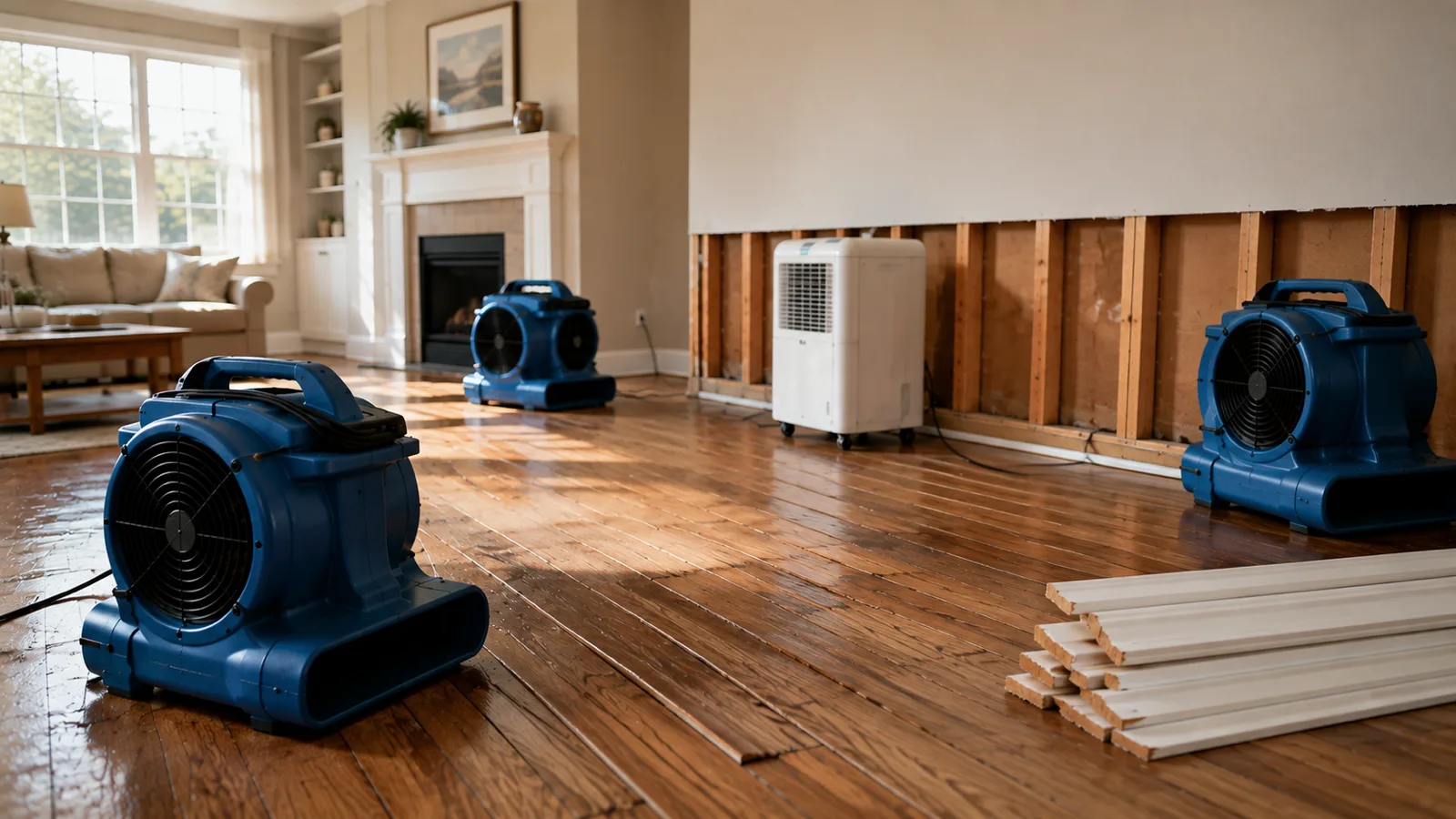
The Short Answer
Most water damage restoration projects fall somewhere between about $1,300 and $5,600, with a national average near $3,300. Small, clean-water cleanups can run a few hundred dollars, while major flooding involving contaminated water can exceed $10,000. The final number depends mostly on how much area is affected, the type of water involved, and how long it sat before drying began.
In This Guide
Average Water Damage Restoration Cost
Nationally, homeowners typically spend somewhere in the range of $1,300 to $5,600 on water damage restoration, with an average around $3,300. Restoration professionals often estimate on a per-square-foot basis, and for most jobs that figure lands between roughly $3.75 and $7.00 per square foot of affected area.
That's a wide band, and for good reason. A single overflowing toilet caught quickly is a very different job from a basement that sat under several inches of water for two days. The per-square-foot figure gives you a rough starting point, but the type of water and the materials involved can move the total significantly.
The ranges below will help you narrow in on where your situation likely falls. Keep in mind these are general estimates, not a quote. Every home and every loss is different.
Cost by Water Category
The restoration industry sorts water into three categories based on how contaminated it is, and this is one of the biggest drivers of cost. More contamination means more labor, more protective equipment, more material that has to be removed and thrown away, and stricter cleaning and disinfection.
- Category 1, clean water: from a supply line, faucet, or rainwater. Typically the least expensive to address, often around $3.00 to $4.00 per square foot.
- Category 2, gray water: from an appliance discharge, a washing machine, or a dishwasher, carrying some contaminants. Usually around $4.00 to $6.50 per square foot.
- Category 3, black water: from sewage backups, flooding, or standing water that has turned. This is the most expensive and hazardous, often $7.00 or more per square foot, because it requires full protective gear, disposal of affected materials, and thorough disinfection.
That's also why a sewage backup or an outside flood so often costs more than a burst pipe. It isn't just the water. It's what's in the water, and what has to be removed because of it.
Cost by Type of Damage
Another way to think about cost is by what actually got wet. Different materials dry, salvage, or replace at very different price points. These are typical ranges for common scenarios:
- Ceiling water damage: roughly $350 to $1,500, depending on the size of the area and whether the drywall must be replaced. See our full guide on ceiling water damage.
- Drywall and walls: around $300 to $800 per affected section for removal and replacement, more if insulation behind it is soaked.
- Hardwood flooring: often $1,000 to $2,500 or more, since wood may need drying, refinishing, or full replacement if it has cupped or warped.
- Carpet: generally a few hundred dollars up to about $1,000 to dry or replace, depending on the padding and subfloor underneath.
- Basement flooding: commonly $3,000 to $10,000 or higher, driven by the volume of water, the water category, and how much finished space is involved.
Many real projects combine several of these at once. A burst pipe on a second floor, for example, can damage the ceiling below, the walls, and the flooring in more than one room. That's how a single event adds up quickly.
Factors That Affect the Price
Beyond water type and materials, several factors push a project toward the low or high end of these ranges:
- Size of the affected area. More square footage means more equipment, more labor, and more drying time.
- How long the water sat. The longer materials stay wet, the more of them have to be removed rather than dried, and the higher the chance of mold.
- Mold growth. If mold has already started, remediation adds to the total. See our guide on how much mold remediation costs, or learn more about our mold remediation services.
- Structural repairs and rebuilding. When drywall, flooring, or framing has to be removed, the job moves from drying into reconstruction. Our restoration and reconstruction services cover that rebuild.
- Accessibility. Water trapped behind walls, under cabinets, or across multiple floors takes more work to reach and dry.
That's why two homes with the "same" leak can end up with very different bills. Where the water went and how long it stayed matter as much as how much of it there was.
Does Insurance Cover the Cost?
For many homeowners, the out-of-pocket cost is far less than the numbers above, because insurance covers the bulk of it. Most standard homeowners policies cover water damage that's sudden and accidental, like a burst pipe or an appliance failure. In those cases you typically pay only your deductible, and insurance handles the rest of the covered work.
Coverage isn't automatic, though. Gradual leaks, flooding from outside, and sewer backups are usually excluded unless you've added specific coverage. We cover exactly what is and isn't included in our companion guide, does homeowners insurance cover water damage?
To make this easier, we offer direct insurance billing. We document the damage, provide estimates adjusters recognize, and bill your carrier directly so you're not caught between the two.
Why Fast Response Lowers the Cost
One of the most reliable ways to keep a water damage bill down is simply to act fast. Cost rises with time, because wet materials that could have been saved eventually have to be replaced instead.
Mold can start growing within 24 to 48 hours in damp conditions. Hardwood that might have been dried and saved on day one can cup and warp beyond repair by day three. Drywall that was merely damp can become a full tear-out and rebuild. The longer the water sits, the more the work grows, and the price grows with it.
That's why professional teams respond around the clock. Getting extraction and drying started quickly isn't just about convenience. It directly limits how much has to be repaired or replaced. You can learn more about our 24/7 water damage mitigation services, or see our step-by-step guide on what to do immediately after water damage.
How to Get an Accurate Estimate
The ranges in this guide are useful for setting expectations, but the only way to know your real cost is an on-site assessment. Moisture hides inside walls, under floors, and above ceilings, so a proper estimate depends on measuring what a quick glance can't see.
A trustworthy estimate should include:
- Moisture readings that map how far the water actually spread
- A clear scope of work listing what will be dried, removed, and rebuilt
- Line-item pricing you can review, rather than a single lump sum
- An explanation of what insurance is likely to cover
Be cautious of quotes that come in far below everyone else. A lowball estimate often means moisture will be missed, which leads to mold and repairs down the road that cost more than doing it right the first time.
Getting a Straight Answer on Your Home
At Atlanta Elite Reconstruction Services, we give homeowners honest, detailed estimates and handle the entire process from emergency drying through full reconstruction under one team. Our lead specialist is IICRC certified, we respond 24/7 across metro Atlanta, and we offer direct insurance billing to keep your out-of-pocket cost as low and as clear as possible. If you want a real number for your home, reach out for a free estimate and we'll come take a look.

About the Author
Matthew Borzie is the founder of Atlanta Elite Reconstruction Services, a family-owned restoration company based in Decatur, Georgia. He is IICRC certified in Water Damage Restoration, Applied Structural Drying, and Applied Microbial Remediation.
The prices in this article are general estimates for informational purposes and are not a quote. Actual costs vary by market, home, and the specifics of the damage. Contact us for an assessment of your situation.