
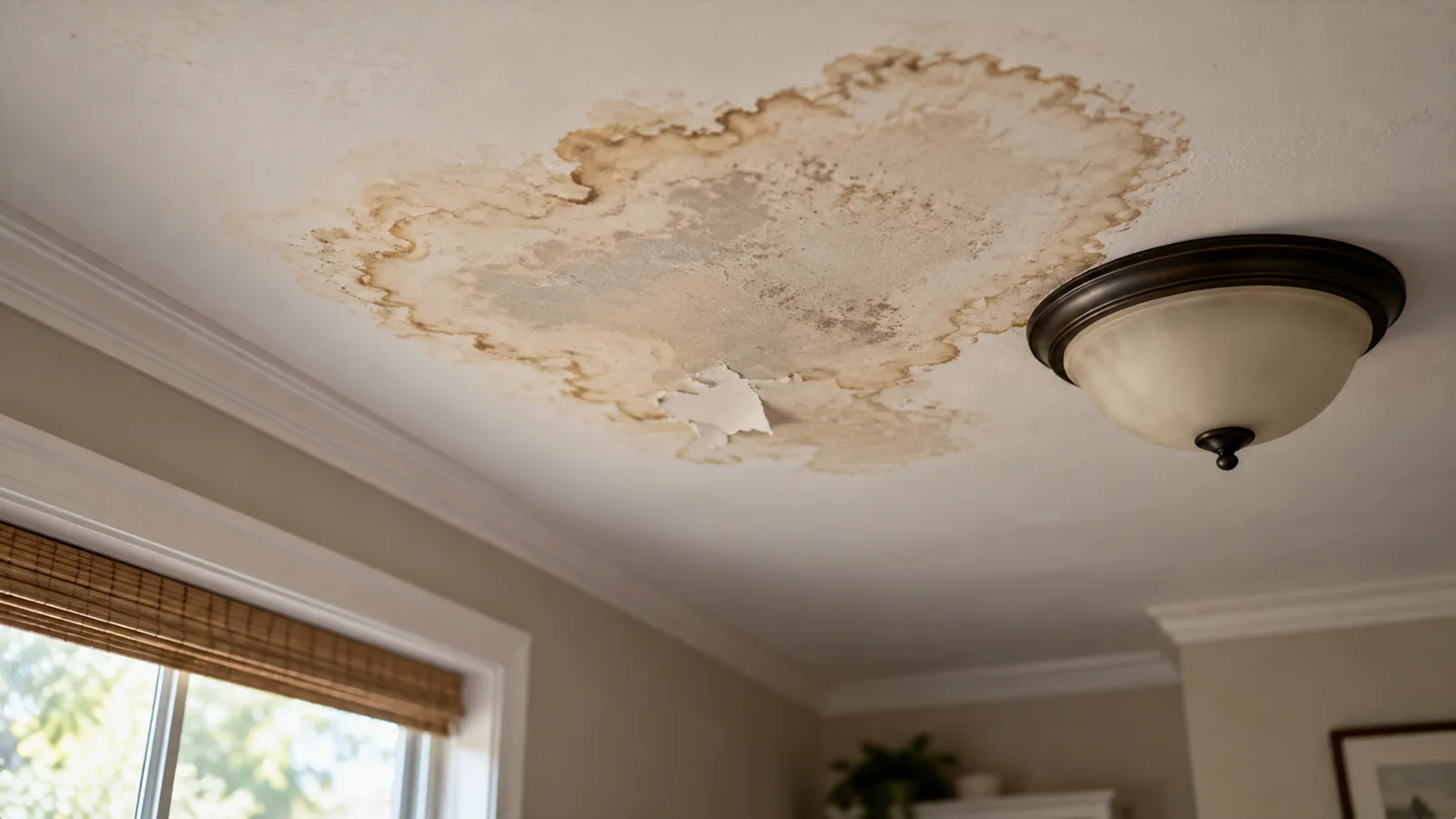
A brown ring on the ceiling, a patch of bubbling paint, a slow drip you can't explain. Ceiling water damage is one of the most common problems homeowners call us about, and it's easy to underestimate. What you see on the surface is usually the smallest part of the problem.
The stain is a symptom. The real issue is water coming from somewhere above, and until you find and fix that source, the damage keeps spreading. Caught early, it's often a minor repair. Left alone, it can lead to mold, ruined drywall, and in the worst cases a ceiling that comes down.
This guide covers what causes ceiling water damage, the warning signs to watch for, when it's an emergency, and exactly what to do next.
The Short Answer
Ceiling water damage almost always comes from a leak above: the roof, a plumbing line, an overflowing appliance, or an HVAC issue. Brown stains, peeling paint, and a musty smell are early signs. A sagging or bulging ceiling is an emergency because it can collapse, so keep everyone clear and get help fast. In every case, the fix is the same order of operations: find and stop the water source, dry the structure fully, then repair, so mold doesn't set in.
In This Guide
What Causes Ceiling Water Damage
Water on the ceiling is always coming from something above it. The trick is figuring out what. The most common sources are:
- Roof leaks. Damaged or missing shingles, worn flashing around a chimney or vent, or storm damage that lets rain in. These often show up as stains on the top-floor ceiling after heavy rain.
- Plumbing leaks. A leaking supply line, drain, or fitting in the floor above, often under an upstairs bathroom, kitchen, or laundry room. A slow pipe leak can drip for weeks before you notice.
- Overflowing fixtures and appliances. An overflowing tub, toilet, or a failed washing machine on the floor above sends water straight down through the ceiling.
- HVAC and condensation. A clogged AC condensate line, a leaking unit in the attic, or condensation on poorly insulated ductwork can all pool and stain a ceiling.
- Ice and weather. Less common in metro Atlanta, but a hard freeze can crack a pipe in an attic or exterior wall and leak once it thaws.
Roof leaks tend to track with the weather, while plumbing leaks show up regardless of rain. That timing is often the first clue to which one you're dealing with.
Warning Signs to Watch For
Ceiling water damage usually gives you warning before it becomes serious. Catching these early is what keeps a repair small:
- Brown or yellow stains. Rings or blotches, often with a darker edge, are the classic sign. A growing stain means an active leak.
- Peeling or bubbling paint. Moisture behind the surface lifts paint and makes it flake or blister.
- Sagging or bulging. Drywall that droops or bulges is holding water and is at risk of collapse. This one is urgent.
- A musty smell. A damp, earthy odor often means moisture, and mold, has been building for a while.
- Active dripping. Water coming through a light fixture or a crack is a clear sign the problem has been going on long enough to saturate the material.
- Cracks that appear or spread. New cracks near a stain can signal that wet drywall is failing.
If you see any of these, don't wait for it to get worse. The longer water sits, the more of the ceiling and the framing above it has to be replaced instead of dried.
When Ceiling Water Damage Is an Emergency
Most ceiling stains aren't an immediate danger, but a few situations are. Treat it as an emergency and keep everyone clear of the area if you see:
- A sagging or bulging ceiling. That bulge is a pocket of water, and the drywall can give way suddenly. A collapsing ceiling is heavy and dangerous.
- Water near light fixtures or wiring. Water and electricity together are a shock and fire risk. Cut power to that area at the breaker if you can do it safely.
- Fast, active flooding from above. A burst pipe or major overflow needs the water shut off right away.
In any of these cases, get people and pets out of the room, shut off the water and power to the area if it's safe, and call for professional help. Our team responds 24/7 across metro Atlanta.
What to Do Right Now
If the ceiling isn't sagging and there's no active flooding, here's how to limit the damage while you sort out the source:
Stop the water if you can. If it's a plumbing or appliance issue, shut off the fixture or the home's main water valve. If it's the roof, there's not much to do until the rain stops, so focus on containing it.
Protect the room. Move furniture and belongings out from under the leak and put down a bucket and towels. If a spot is bulging with water, a pro can relieve it safely, but don't stand under it.
Document everything. Photograph the stain, any dripping, and damaged belongings before cleanup. It matters for your insurance claim. Our guide on what to do immediately after water damage walks through the full first-hours checklist.
Call a professional. Finding the true source and drying the structure takes moisture meters and commercial equipment. A restoration team can trace the leak, dry the ceiling and framing, and handle the repair. You can learn more about our water damage mitigation services.
Can You Just Paint Over It?
It's tempting, but no. Painting over a water stain without fixing the source and drying the area is one of the most common mistakes we see, and it always comes back. The stain bleeds through, the leak keeps going, and moisture trapped behind the paint becomes the perfect place for mold to grow.
Mold can start growing within 24 to 48 hours in damp conditions, so a ceiling that's been wet for a while may already have it above the surface where you can't see it. Painting seals the problem in rather than solving it.
The right order is always the same: fix the source, dry the structure completely, replace anything too damaged to save, and only then repaint. If you're already seeing or smelling mold, our mold remediation team can assess and handle it.
Insurance and Repair Cost
Whether insurance covers ceiling water damage comes down to the cause. A sudden, accidental event like a burst pipe or a storm-damaged roof is usually covered. A slow leak that went unaddressed for months is usually treated as a maintenance issue and denied. We break down the full picture in our guide on whether homeowners insurance covers water damage.
Cost depends on how far the water spread and how much of the ceiling and framing has to be replaced versus dried. A small, quickly-caught stain is a modest repair; a saturated ceiling with mold above it is a much bigger job. Our guide on how much water damage restoration costs covers typical ranges. The theme, as always, is that speed keeps the number down.
How We Can Help
At Atlanta Elite Reconstruction Services, we trace the leak to its source, dry the ceiling and the framing above it with commercial equipment, and handle the repair from patching through paint. Our lead specialist is IICRC certified, we respond 24/7 across metro Atlanta, and we offer direct insurance billing when the damage is covered. If you've got a stain that's growing or a ceiling you're worried about, reach out to our team and we'll take a look.

About the Author
Matthew Borzie is the founder of Atlanta Elite Reconstruction Services, a family-owned restoration company based in Decatur, Georgia. He is IICRC certified in Water Damage Restoration, Applied Structural Drying, and Applied Microbial Remediation.