
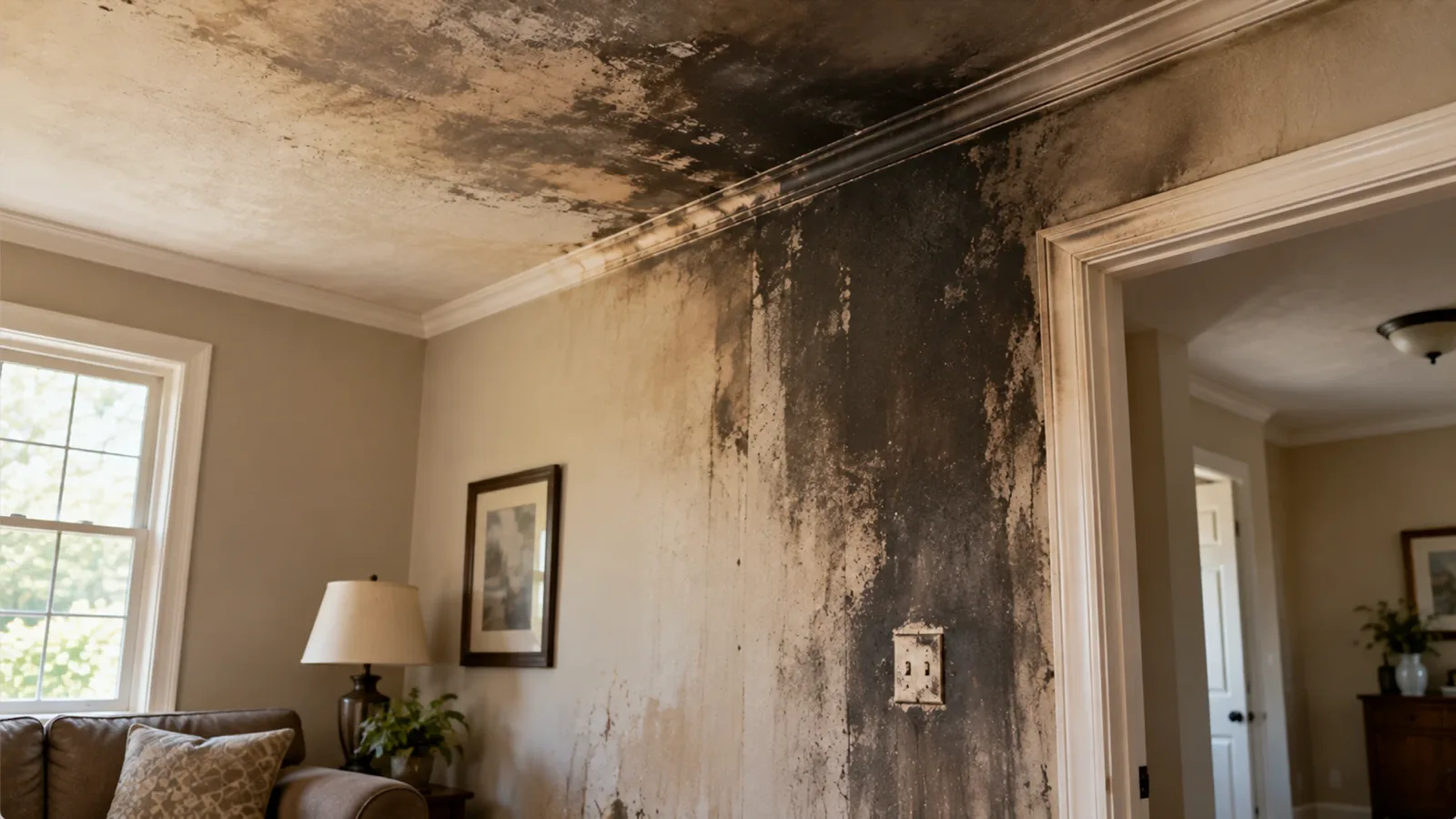
Smoke damage cleanup is one of the trickiest parts of recovering from a fire. The flames are out, but the smoke leaves behind soot, staining, and an odor that settles into everything. Left alone, it keeps causing damage long after the fire is gone.
Here's the hard part. Smoke travels into places you can't see, like wall cavities, ductwork, and the pores of your drywall. So wiping down the visible soot rarely solves it. In fact, the wrong cleaning method can make the staining worse.
This guide covers what smoke damage does, what you can safely handle yourself, and how professional cleanup works, right down to getting rid of that stubborn smell.
The Short Answer
Smoke damage cleanup means removing soot, cleaning every affected surface, treating your belongings, and deodorizing the air and materials. Soot is acidic, so it stains and etches fast. That's why speed matters. Light surface soot can be a DIY job. Anything widespread, greasy, or sticky really needs a professional. The smell is the last step, and it usually takes more than air fresheners to remove for good.
In This Guide
What Smoke Damage Does to Your Home
Smoke is more than a smell. It's a mix of fine soot particles and chemicals that settle on every surface and soak into porous materials. And it doesn't just sit there quietly.
Soot is acidic. Within hours, it starts to stain and etch surfaces like metal, glass, and countertops. Within days, it can discolor walls and corrode fixtures. So the longer it stays, the more of your home has to be replaced instead of cleaned.
Smoke also spreads far beyond the room where the fire started. It follows the airflow through your HVAC system and into wall cavities. That means even a small fire can leave residue throughout the house, which is why cleanup is rarely a one-room job.
The Types of Smoke Damage
Not all smoke is the same, and the type changes how it's cleaned. Here are the main ones:
- Dry smoke. From fast, high-heat fires. It's powdery and easier to wipe away, but it works deep into cracks and crevices.
- Wet smoke. From slow, smoldering fires. It's thick, sticky, and smeary, so it's much harder to remove.
- Protein residue. From kitchen fires. It's nearly invisible, but it carries a strong, lasting odor and discolors paint and finishes.
- Fuel or oil smoke. From a furnace puff-back or an oil-based fire. It leaves a heavy, greasy film behind.
Figuring out which type you're dealing with is the first thing a pro does, because it decides the whole cleaning method.
Can You Clean Smoke Damage Yourself?
Sometimes, yes. If the damage is light and limited to a small area of hard, sealed surfaces, you can often handle it. For small surface soot, here's a safe approach:
- Ventilate the room first by opening windows and running fans.
- Wear gloves and a mask, because soot is a health hazard.
- Wipe hard surfaces with a dry chemical sponge, not a wet cloth. A wet cloth smears soot in.
- Wash any washable fabrics separately from the rest of your laundry.
But know the limits. Don't try to DIY if the soot is widespread, greasy, or sticky, if it has reached your HVAC system, or if a smell lingers after you clean. In those cases, scrubbing usually spreads the problem and pushes the odor deeper. That's when it's time to call a professional.
How Professional Smoke Damage Cleanup Works
A restoration team follows a clear order, because the sequence matters as much as the cleaning. Here's what the process looks like:
- Assessment. We identify the smoke type, map how far it spread, and check the HVAC system.
- Air filtration. Air scrubbers with HEPA filters pull soot particles out of the air first.
- Soot removal. We use dry sponges and specialized vacuums before any wet cleaning, so we don't smear residue in.
- Surface cleaning. Walls, ceilings, and hard surfaces get the right cleaning solution for that smoke type.
- Contents cleaning. Furniture, electronics, and belongings are cleaned and deodorized, often off-site. See our contents cleaning service.
- Deodorizing. This is the step most DIY efforts miss, and we cover it next.
Doing these in order is what separates a cleanup that lasts from one that comes back a week later.
How to Get Rid of the Smoke Smell
The smell is the hardest part, because the odor hides in materials you can't wipe down. Masking it with air fresheners never lasts, since the smoke particles are still there. Real odor removal neutralizes the source instead of covering it.
Professionals reach for a few tools to do this:
- Thermal fogging. It recreates the way heat carried smoke into materials, so the deodorizer reaches the same hidden spots.
- Ozone or hydroxyl treatment. This breaks down odor molecules in the air and on surfaces.
- HVAC and duct cleaning. Your system spreads the smell every time it runs, so it has to be cleaned too.
In short, if the smell keeps coming back after you clean, the source hasn't been treated yet.
Does Insurance Cover Smoke Damage?
Usually, yes. Smoke and soot damage from a sudden fire is covered under most standard homeowners policies, the same way other sudden, accidental damage is. You'll typically pay your deductible, and insurance covers the rest of the approved work.
The cause still matters, though, just like it does with water. Our guide on how homeowners insurance handles sudden damage explains the "sudden and accidental" rule in detail. We also offer direct insurance billing, so we handle the paperwork with your carrier for you.
How We Can Help
At Atlanta Elite Reconstruction Services, we handle smoke damage cleanup from the first assessment through deodorizing and repair. We identify the smoke type, clean every affected surface and belonging, treat the odor at its source, and put the space back together. Our lead specialist is IICRC certified, we respond 24/7 across metro Atlanta, and we bill your insurance directly when the damage is covered. If you're dealing with smoke or fire damage, reach out to our team or learn more about our fire and storm damage restoration services.

About the Author
Matthew Borzie is the founder of Atlanta Elite Reconstruction Services, a family-owned restoration company based in Decatur, Georgia. He is IICRC certified in Water Damage Restoration, Applied Structural Drying, and Applied Microbial Remediation.